 FA
FA  EN-US
EN-US Saman Parvaneh
Healthcare AI & Data Science Leader
I help healthcare and medtech organizations translate physiological data, predictive modeling, clinical decision support, and AI into real-world impact for patients and products.
Keep Scrolling


Based in United States
Profile
I'm a healthcare AI and data science leader with 15+ years of experience building enterprise AI, machine learning, biomedical signal processing, and physiological monitoring solutions in regulated healthcare and medical technology. I help organizations translate clinical, physiological, and real-world data into AI strategy, product innovation, decision support, and measurable healthcare impact.
Measured Impact
40+
AI/ML Solutions Delivered
150+
FTE-Days Saved Annually
20+
Patents & Invention Disclosures
80+
Publications, Presentations & Invited Talks
A record of translating healthcare AI, physiological monitoring, and clinical analytics into measurable product, operational, and scientific impact.
Leadership Focus
Enterprise AI Strategy: Scaling AI and machine learning capabilities across regulated healthcare and medtech organizations.
Clinical Decision Support: Building predictive models and decision-support systems grounded in clinical workflow and patient outcomes.
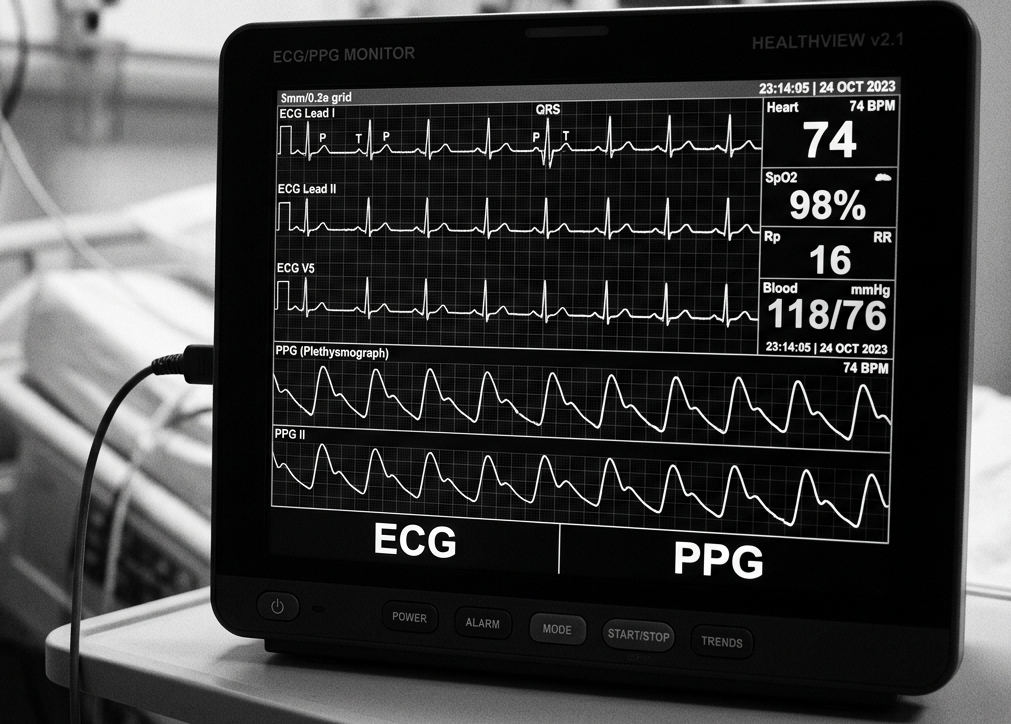
Physiological AI & Monitoring: Translating ECG, wearable, sensor, and real-world data into intelligent monitoring solutions.
AI Product Innovation: Moving algorithms from research concepts into usable, scalable healthcare products.
Education
Selected Recognition & Speaking
- November 2023: Invited speaker, Deep Learning in Healthcare & Pharma Summit, Boston, MA.
- October 2023: Presented two articles and chaired one session at Computing in Cardiology 2023.
- April 2023: Invited speaker, 47th Annual Scientific Conference of the International Society for Computerized Electrocardiology, Indian Wells, CA.
- September 2022: Presented three articles and chaired one session at Computing in Cardiology 2022.
- September 2021: Presented two articles and chaired a special session on cardiac autonomic nervous system, heart rate response, recovery after activity, and wearable sensors for frailty assessment at Computing in Cardiology 2021.
- December 2020: Paper published: Frailty and Heart Response to Physical Activity.
- October 2020: Paper published: Pervasive Lying Posture Tracking.
- March 2020: Papers published on post-operative atrial fibrillation prevention and motor function uncertainty in cognitive impairment.
- January 2020: Joined Edwards Lifesciences as Principal Data Scientist.
Technical Leadership Domains
Biomedical Signal Processing & Modeling
Computational methods for interpreting physiological signals and modeling biomedical systems.
Body-Worn Sensor Algorithms
Algorithms for wearable sensors, including accelerometer, gyroscope, pressure sensor, and ECG monitoring data.
Affective Computing from Biosignals
Emotion and stress assessment using physiological signals such as heart rate and heart rate variability.
Outcome Evaluation
Objective evaluation of gait, balance, physical activity, and physiological response in real-world and clinical contexts.
Clinical Decision Support
Predictive models and clinical decision support systems that translate data into actionable healthcare insight.